
Tooth Removal
Though tooth extraction procedure is nerve racking, it is a common procedure with little recovery time.
Why are teeth removed? Is it necessary?
Indications of extraction includes :
Also it is important to let your doctor know whether you are suffering from conditions like :
This is to assess your medical health before procedure and plan accordingly.
Moreover, antibiotics need to be taken prior to extraction if you have an infection, weakened immune response or a medical condition.
What happens during extraction procedure?
Primary assessment
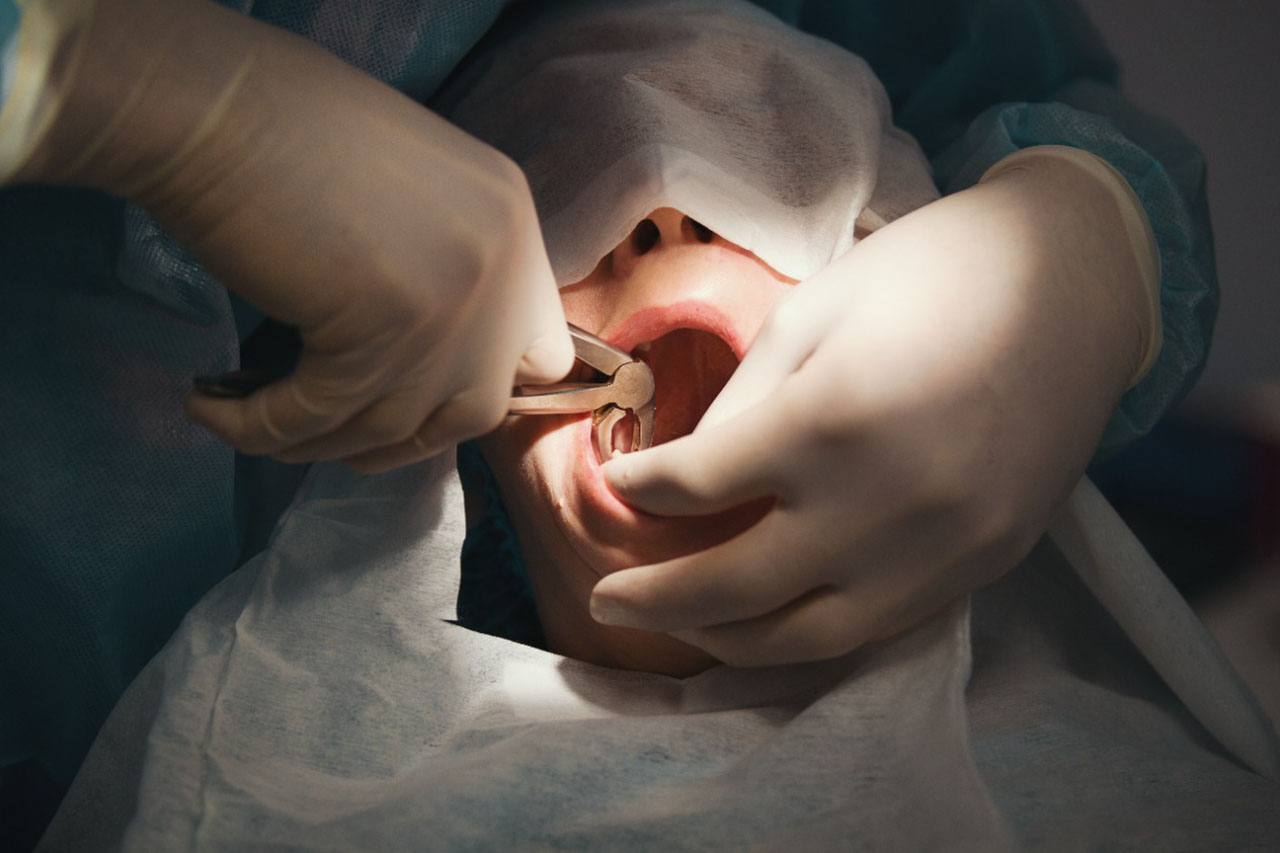
Your teeth may require either simple forceps or surgical extraction. This completely depends on the case scenario . Radiographs are taken to assess the condition of the tooth.
Simple extraction
This is performed under local anesthesia with the help of forceps or elevators. You will only feel pressure and not pain during removal.
Surgical extraction
They may require gum incision and at times bone removal . However, this is a painless procedure and is performed completely under anesthesia to make it comfortable.
Closure of wound
Once the tooth is removed , the socket which was formerly rooted will be left open. Here, socket will be cleaned to remove fragments and debris followed by suturing to approximate the wound and to control bleeding.
Bleeding control
It is normal to notice bleeding from extraction site for 24 hours post extraction. To control bleeding, you might need to bite a cotton roll for 30 minutes.
3rd Molar Impaction Or Wisdom Tooth Impaction
What are impacted 3rd molar teeth?
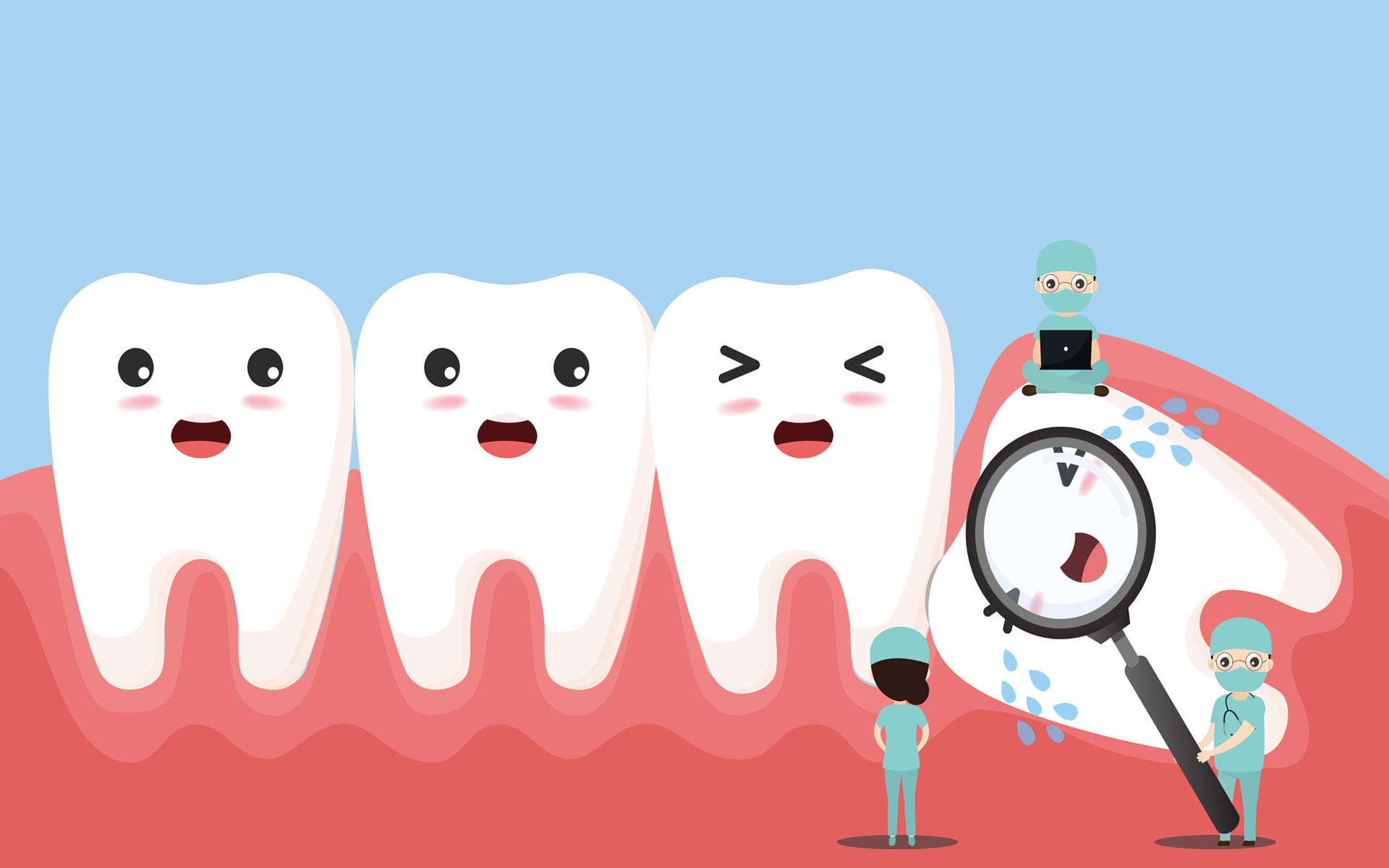
Impaction happens when your tooth become partially or fully trapped in gums or jawbone.
Third molars, also known as wisdom tooth are 4 in number and are located at end of the arch or back of the jaw. These are last to erupt in the oral cavity by 17 to 22 years of age.
Have you ever wondered why they are called wisdom?
They are termed as wisdom tooth because they erupt by the time a person become wiser, as they appear late when a person matures and enters adulthood.
These can erupt and remain healthy and uninfected in many whereas, many cases indicate their emergency removal, especially when they exhibit presence of infections and other pathologies.
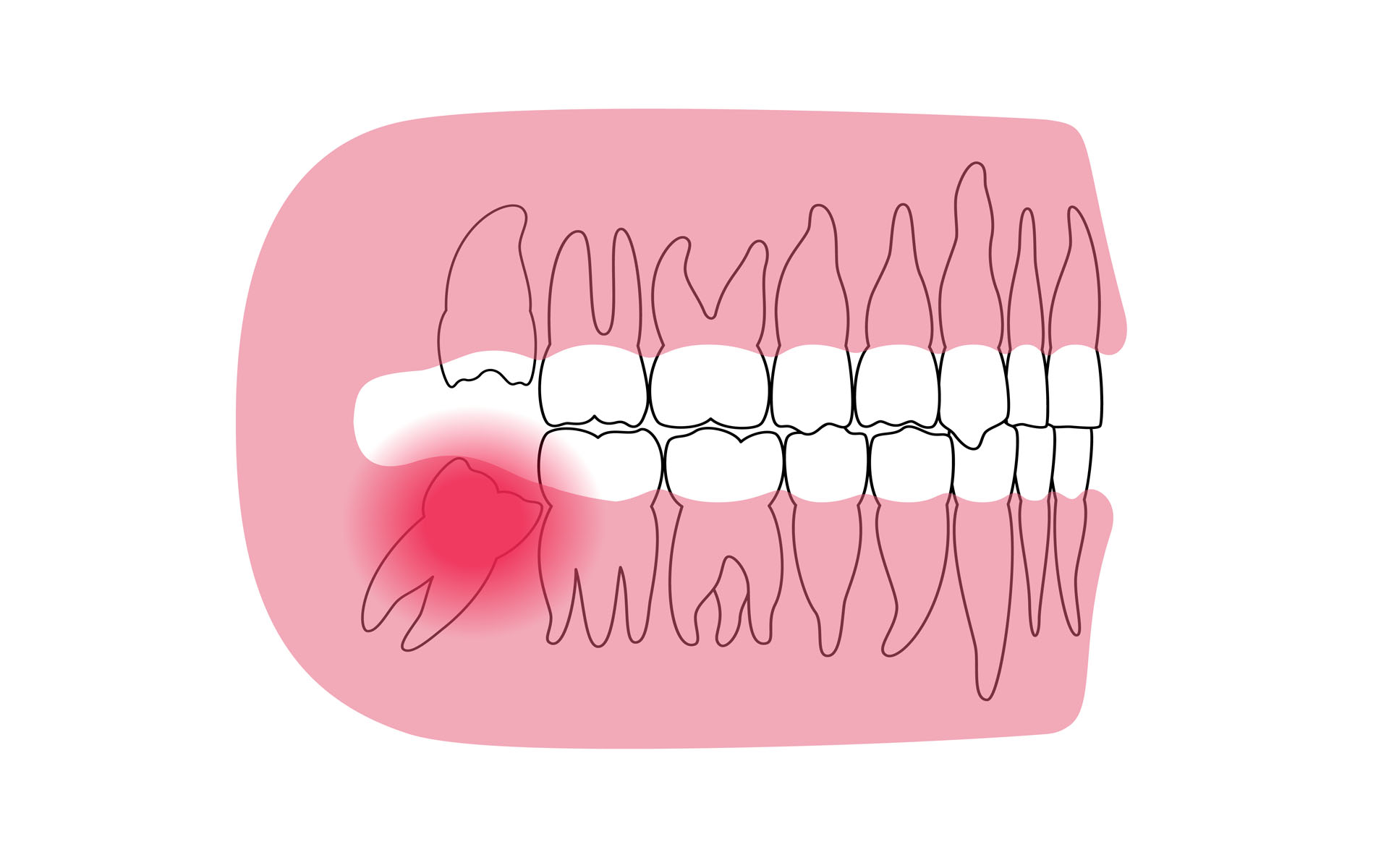
At times , they erupt partially with gum growth over them resulting in gum inflammation and severe pain. These cases also show presence of food impaction beneath the growth making the whole scenario worse.
Some individuals show the presence of 3rd molars deep inside the bone. These are detected only on radiographs as they do not show any evidence of eruption. All these cases if symptomatic leads to extraction procedure if unattended. Procedure of extraction completely depends on the tooth angulation and position. Some cases demand surgical removal whereas, others only need forceps extraction. This completely depends on individual patient case and cannot be predicted.
What are the different types of impacted wisdom teeth?
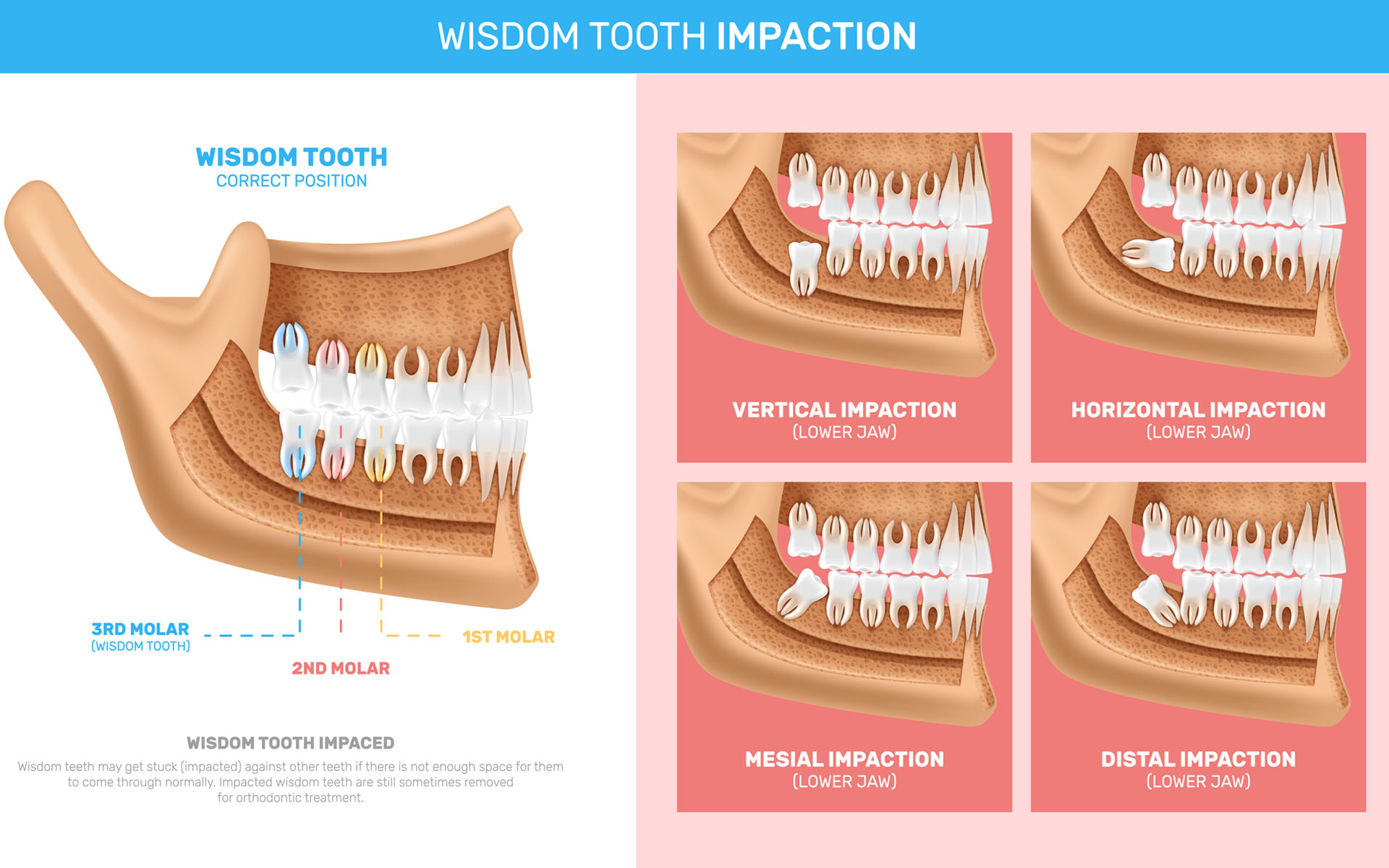
Mesial impaction
Most common type of impaction where tooth is angulated towards the front of the mouth.
Distal impaction
This is the rarest type of impaction and here tooth is angulated towards the back of the mouth.
Vertical impaction
Here tooth is in the correct position for eruption but trapped beneath your gums or bone.
Horizontal impaction
Here tooth may lay by side beneath the gums and are often painful as they exert pressure on the teeth infront of them.
Why are they always found to be more infected compared to other tooth in oral cavity?
As they capture the corner space in the mouth, they may entrap food debri. Also, they are difficult to clean. Hence, they are more prone to decay and infections.
When should I doubt an impaction?
Treatment
Usually , their removal is recommended when there is any infection, decay or pain. Many cases indicate prophylactic removal also. Treatment plan depends on clinical evaluation, radiographic assessment , chief complaint , patient history , diagnosis and prognosis. All these play a pivotal role in scheduling the treatment.
Is it painful?
No, they are performed under local anesthetic and pain medications can be administered soon after the procedure to manage post treatment discomfort.
Care After Tooth Extraction
After care of an extracted socket varies depending on factors like location of tooth and type of extraction. It is vital as as it helps promote clotting and protect the extraction site during the healing process.